
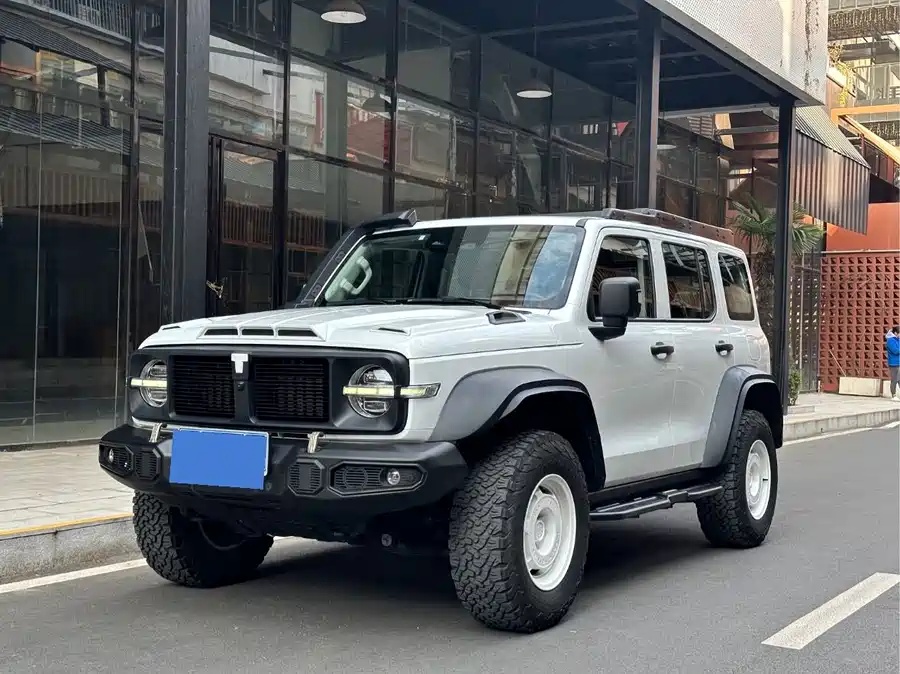
Assess a snorkel-equipped Tank 300 through installation records, intake integrity and wider water-exposure evidence. Do not assume a raised inlet waterproofs it.
Identify the accessory and the installation history
Ask for the snorkel manufacturer, part identity, fitting instructions and the installer’s record. Check whether the kit applies to the actual engine and body configuration rather than relying on a generic Tank 300 label. Record holes, altered panels, brackets and any displaced original equipment through safe inspection. The modifications and export guide helps distinguish documented installation from decorative equipment. A professional-looking exterior does not establish the unseen connections. If the seller cannot identify the component or installer, keep it as an unverified modification and obtain a competent assessment before deciding whether to retain or reverse it.
Have the complete intake assessed by a qualified workshop
The workshop should examine relevant accessible joints, ducting, airbox and sealing according to the applicable procedure. Do not plug openings, pressurise the system or spray water into components as a buyer experiment. Ask the technician what can be assessed without dismantling and what remains unknown. The turbo and cooling inspection is relevant where airflow symptoms or altered plumbing accompany the accessory. A raised inlet cannot compensate for an unsuitable or damaged downstream connection. The assessment should distinguish confirmed installation defects from areas that simply were not accessible during the visit, with any further work priced separately.
Read water history beyond the engine air inlet
Ask about crossings, immersion, recovery events and later repair or service. Inspect accessible cabin, electrical and underbody areas for consistent evidence rather than treating one clean air filter as a whole-vehicle result. Use the accident, flood and restraint checks when moisture, corrosion or history raises concern. Water can affect components unrelated to the intake, and a snorkel does not establish protection for them. Preserve photographs before cleaning. A seller’s adventurous use story is not proof of safe operation or a fault, but it supplies specific questions the inspector should try to resolve.
Separate rated guidance from accessory marketing
Obtain the applicable vehicle operating limits and instructions for the identified market and configuration. Check any qualifications about preparation, conditions and inspections through the appropriate representative. Do not raise a documented limit solely because a snorkel has been installed. A quoted water depth from another version cannot approve this vehicle or a future crossing. The off-road capability guide helps distinguish configuration from use-specific assessment. For purchase purposes, focus on whether past operation and modifications leave acceptable current condition. There is no need to risk another crossing to prove that an advertisement’s capability claim is true.
Request evidence of follow-up servicing and diagnosis
After reported water exposure, ask what checks and services were completed, by whom and at what mileage. Keep invoices and findings rather than accepting a general statement that everything was flushed. The post-off-road service evidence guide addresses fluids, filters and other condition questions appropriate to the actual event. Relevant warning history, unusual operation or contamination concerns require qualified diagnosis. Do not prescribe one universal replacement list or assume fresh fluids erase internal damage. A clear follow-up record can help evaluate the risk, but unresolved exposure remains a commercial and support question even when the car currently starts normally.
Decide whether the modification suits the buyer
Obtain destination advice about the accessory and any body alteration, plus a supported repair or removal estimate if needed. Restoring the intake or panel may involve more than taking off the visible tube. Include parts, sealing, workmanship and any repeat assessment in the delivered budget. Compare a documented snorkel-equipped candidate with a factory-configuration alternative using the same condition standard. If the buyer only needs city and highway use, the accessory may add inspection burden without useful value. Approve a vehicle whose history, installation and present condition can be explained; do not pay extra for a snorkel as a substitute for water-exposure evidence.
Evidence to collect
- Identified kit and fitting records
- Qualified complete-intake assessment and exclusions
- Cabin/electrical/underbody water-history review
- Applicable vehicle guidance, not an accessory promise
- Follow-up service and supported repair/removal scope
Frequently asked questions
Does a snorkel increase every Tank 300’s approved wading limit?
No. Use the applicable manufacturer guidance and accepted configuration; an accessory claim does not change it automatically.
Should a seller demonstrate a crossing before purchase?
Do not request a risky water test. Obtain qualified inspection and documented history instead of creating new exposure.