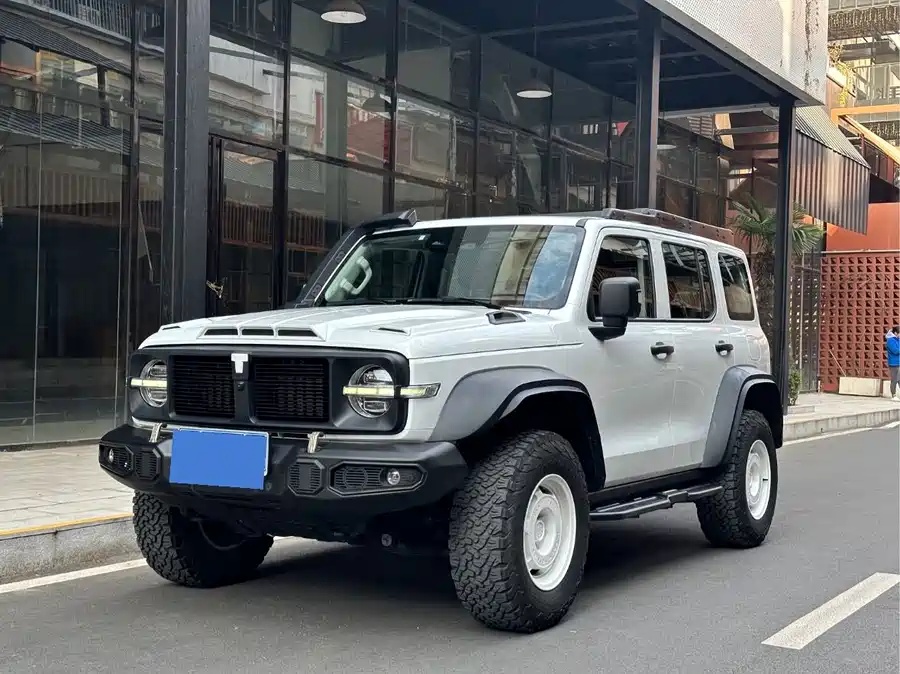
Understand City, Off-Road, Conqueror, special editions and newer powertrains by checking hardware and documents rather than translated trim names.
Start with production identity
Ask for the full VIN, production label and first-registration date. A seller may describe a vehicle by registration year even when its production batch belongs to an earlier specification. Confirm the engine and transmission physically and in documents. This establishes the mechanical family before comparing comfort or technology features.
Distinguish city and off-road positioning
City-oriented and off-road-oriented listings can differ in four-wheel-drive strategy, locking hardware, tyres, protection and convenience equipment. Do not infer these features from body colour, grille, badges or wheel design. Photograph the relevant controls and underbody components, and verify that selectable systems operate without stored faults.
Treat special editions carefully
Special editions can include appearance packages, branded accessories or more substantial factory changes. Confirm whether parts appear in the factory build information, original invoice or registration record. Aftermarket bumpers, lifts, wheels, lighting and roof equipment should be documented independently because they may affect shipping dimensions, inspection and destination legality.
Match the version to support
The most impressive specification is not automatically the best export choice. A familiar petrol version may be easier to service in one country, while an official HEV or diesel network may make another version more practical elsewhere. Check parts channels, diagnostic support, fuel quality, emissions rules and local resale recognition before selecting the grade.
Evidence to collect
- VIN and build month
- China or export-market grade
- Factory drivetrain hardware
- Factory options and keys
- Aftermarket changes
- Local parts and diagnostic support
Apply the guide to a real candidate
Create a version evidence table
Put the seller’s trim claim in one column and verified evidence in another. Rows should include production date, engine, transmission, transfer case, differential locks, wheel and tyre size, cameras, driver assistance, seats, audio, keys and factory accessories. Mark each row as document-confirmed, physically observed, function-tested or unverified. This prevents a translated grade name from silently becoming a long list of assumed features in the purchase agreement.
Model-year changes and software
A registration year may span more than one production specification. Infotainment hardware, driver-assistance sensors, cabin controls and powertrain calibration can change without an obvious exterior redesign. Confirm build month and photograph software version screens where regional compatibility matters. Do not promise that an over-the-air update, mobile application, map service or voice function will work outside China unless the destination network or manufacturer has confirmed it for that VIN.
Accessory packages are not harmless labels
Factory off-road packages and aftermarket builds can look similar in photographs. Confirm origin through invoices, option information, hardware markings and installation details. Added bumpers, suspension or wheels may alter declared dimensions, mass, camera calibration and road approval. Record original parts included in the sale. A buyer who wants factory condition should make removal and restoration part of the written acceptance terms, not an informal task after shipping.
Final approval control
Before accepting a trim description, ask the supplier to sign or attach the verified equipment table to the vehicle quotation. Highlight any field that remains unconfirmed and exclude its value from the negotiation. If a feature is essential—such as a locking differential, a particular steering side, specific safety hardware or a compatible powertrain—make it an acceptance condition tied to physical and documentary evidence. This approach also protects the supplier from an ambiguous translated name: the transaction is based on observable equipment and identifiers rather than an informal assumption about what “Conqueror,” “City” or a special-edition label ought to include.
Frequently asked questions
Is Conqueror the same specification in every year?
No. Verify the model year, production batch and actual hardware.
How can I recognise a special edition?
Use factory documentation and identifiable equipment; graphics and badges alone are weak evidence.
Which version is best for export?
The version that is legal, supportable and suitable for the buyer’s terrain and budget—not necessarily the highest trim.