
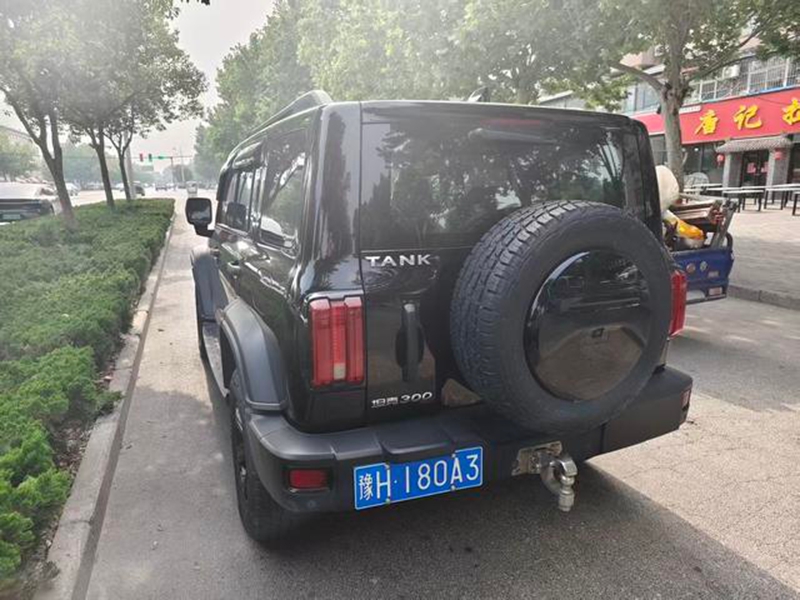
Review Tank 300 care after dust, mud and rough-road use. Connect cleaning, underbody checks, fluid inspection and documented repairs before purchase.
Ask what the vehicle actually did
Request a practical history: dusty touring, slow rocky tracks, repeated mud use, water crossings, towing and recovery events. Dates, photographs and invoices are more useful than a general statement that the car was never used hard. Ask whether accessories were fitted before or after those trips. The frame and underbody wear guide sets out the physical inspection. Keep normal use separate from damage: a lightly marked guard can be cosmetic, while a sharp strike near a mount, line or housing deserves close assessment regardless of how adventurous the trip sounded.
Inspect behind the clean exterior
A workshop should examine accessible underbody recesses, guards, suspension, cooling surfaces and drain areas for trapped material and contact damage. Do not remove protective parts without agreement and appropriate support. Fresh coating or a heavily polished engine bay may limit what can be seen, so request earlier images where available. Check whether cleaning methods could have affected seals, connectors or finishes. A seller may genuinely have maintained the car carefully, but the evidence should show both cleaning and inspection rather than assuming one automatically accomplished the other.
Connect dust exposure to intake and service records
Inspect the air-filter housing, filter fit, accessible intake sealing and documented replacement. Ask a technician to interpret any signs of contamination beyond the filter instead of drawing a major engine conclusion from one dusty surface. Confirm that service intervals were selected for the actual conditions using the appropriate manual. An aftermarket intake or snorkel requires its own installation assessment and does not prove water protection. If the vehicle has running or temperature complaints, continue with the turbo and cooling checks rather than attributing every symptom to ordinary trail use.
Treat water exposure as a separate investigation
Ask about depth, duration, vehicle movement and any subsequent warning, fluid change or electrical repair, without using a brochure figure as a safe threshold. A qualified workshop may need to assess relevant lubricants, housings, breathers, connectors and cabin low points. Do not open hot systems or perform electrical work casually. The accident and flood guide becomes important when immersion or concealed contamination is possible. A clean dipstick or dry carpet alone cannot exclude water-related damage across the whole vehicle. Record where inspection access or evidence remains incomplete.
Review repairs for cause and follow-up
For replaced arms, dampers, bearings, shafts, guards or tyres, ask what failed and whether alignment, diagnostics and road behaviour were checked afterwards. Replacement parts are not automatically negative; they can show responsible maintenance when properly documented. Repeated failures or mixed component specifications need a deeper explanation. Compare the installed parts with the delivered load and modifications. Keep repair, preventive maintenance and cosmetic restoration in separate budget lines. A receipt for a new component proves expenditure, not necessarily that the root cause was understood or that related damage was ruled out.
Decide whether the history supports continued use
A Tank 300 with disclosed trips, credible servicing and a consistent independent inspection can be a reasonable choice. An apparently untouched car with missing records and suspicious cleaning may carry more uncertainty. Approve the actual evidence rather than rewarding either an off-road story or an absence of photographs. Set out the next service, unresolved tests and the destination workshop route. Before loading, verify that corrected leaks, loose parts or warning conditions have been retested. The buyer should receive a usable maintenance baseline, not a promise that a rugged vehicle never needs attention after demanding use.
Evidence to collect
- Dated route and recovery history
- Inspection behind guards where safely accessible
- Intake sealing and severe-use service records
- Separate water-exposure assessment
- Repair causes, alignment and repeat road test
Primary references
Specifications and equipment can vary by market, model year, trim, VIN and production batch. Verify the exact vehicle and current destination rules before purchase.
GWM Australia Tank 300 brochure: market reference; verify the candidate separately ↗Frequently asked questions
Should every off-road-used Tank 300 be rejected?
No. Judge the severity of use, maintenance response and present condition. Documented care and independent inspection matter more than a simple used-off-road label.
Does a snorkel prove the engine is protected from water?
No. Installation, the complete intake system and vehicle limits matter. Other electrical and mechanical components also remain exposed to water-related risk.