
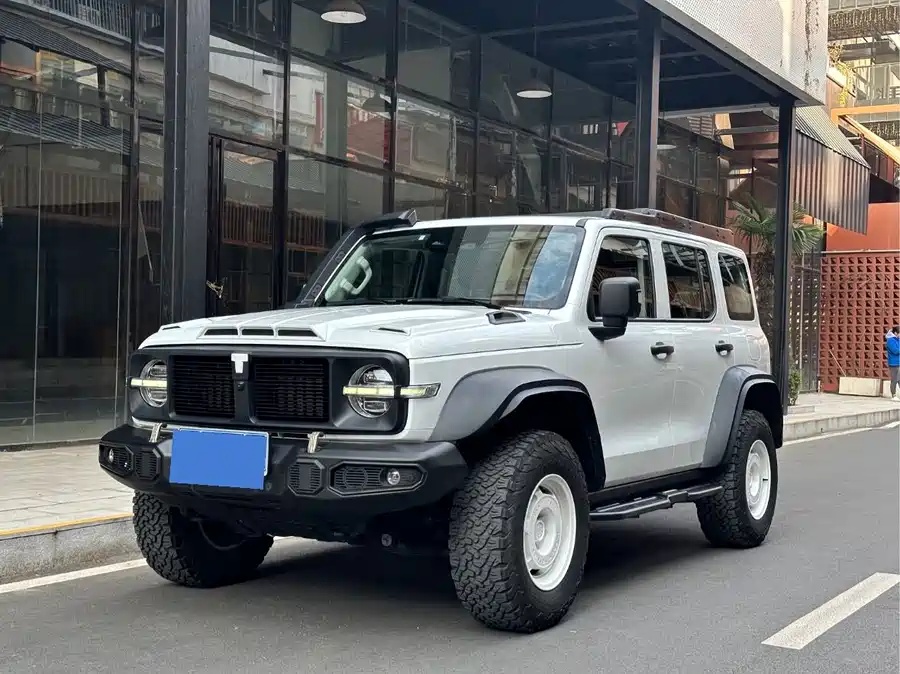
Verify Tank 300 lifts, wheels, bumpers, winches, lighting and electrical accessories for safety, documentation, shipping and destination approval.
Separate factory equipment from aftermarket work
Record the VIN and factory configuration first, then list every observed change: springs, dampers, control arms, wheels, tyres, bumpers, guards, rock sliders, racks, winches, lighting, snorkels, storage systems, towing hardware and electronic modules. Photograph manufacturer labels, serial numbers, mounting points and wiring. Ask for invoices and installation records, but verify the vehicle rather than relying on paperwork alone. Cosmetic packages can resemble functional equipment, while genuine components can be combined with unsuitable fasteners or altered brackets. The final contract should identify which accessories remain on the vehicle and which will be removed before inspection or shipment.
Recalculate mass, geometry and operating limits
A lift, larger tyre, steel bumper, winch, rear carrier or roof system changes more than appearance. Measure delivered height, width, wheel and tyre dimensions and, where practical, axle and total mass. Check rubbing through steering and suspension travel, brake-line and sensor clearance, driveshaft angles, wheel offset, tyre load rating and spare-wheel compatibility. Permanent accessories reduce available payload and can alter towing and roof-load margins. Use the Tank 300 towing, payload and roof-load guide to rebuild the working calculation instead of carrying factory assumptions into a modified vehicle.
Inspect electrical and safety integration
Trace accessory power from the source through fuse, relay, cable protection, connectors and earth points. Confirm that added lights, compressors, refrigerators, radios and winches do not share an undersized circuit or interfere with airbags, cameras, radar, parking sensors or cooling airflow. Loose cable routing near exhaust, steering or sharp metal is a rejection item until corrected. Scan modules before and after operating accessories and watch for battery drain. A bumper or grille change near driver-assistance sensors may require approved mounting and calibration, even when no warning lamp is visible.
Resolve destination and shipping acceptance
Give the destination broker or technical authority a dimensioned accessory schedule before purchase. Ask specifically about lift height, tyre protrusion, lighting colour and position, bumper construction, pedestrian-safety rules, tow coupling approval, roof equipment and emissions-related changes. Give the carrier actual dimensions, running condition and removable-item plan; racks, jerry cans, loose tools or personal cargo may be restricted. Record removal labour, replacement factory parts and local inspection fees in the landed budget. If a critical approval cannot be obtained, source a standard vehicle or remove the modification in China under documented conditions.
Evidence to collect
- Factory-versus-aftermarket register
- Part labels and installation records
- Delivered dimensions and mass
- Wiring and sensor integration
- Destination approval evidence
- Carrier and removal plan
Apply the guide to a real candidate
Use an accessory disposition table
For each modification, select keep, remove, repair or investigate. Name the responsible party, evidence needed, completion date and effect on quotation. Photograph the vehicle again after removals so missing trim, cut wiring or open mounting holes are not discovered at loading. Preserve removed factory parts only when the carrier and import rules allow them to travel safely.
Ask for a post-work validation
After modification work, repeat the relevant alignment, diagnostic, lighting, sensor, road-test and leak checks. A workshop invoice proves that work was billed, not that the vehicle meets the agreed condition. Tie final payment and shipping release to the revised evidence set and delivered dimensions.
Final approval control
Approve the delivered configuration, not the vehicle first advertised. Reconcile the accessory table with final photographs, dimensions, axle and total mass where relevant, diagnostic results, destination advice and carrier declaration. Confirm that removed wiring is safely terminated and that required factory parts are present. Any unapproved change between inspection and loading requires a new review. The quotation should show removal, repair and local approval costs so that attractive accessories do not conceal a worse landed-value result.
Primary references
Specifications and equipment can vary by market, model year, trim, VIN and production batch. Verify the exact vehicle and current destination rules before purchase.
Official GWM Tank 300 brochure ↗Frequently asked questions
Is a dealer-installed accessory automatically export compliant?
No. Installation quality and destination approval remain separate questions.
Should a modified Tank 300 always be avoided?
No, but the value depends on verified parts, safe installation, legal acceptance and the buyer’s real use.
Do accessories affect shipping cost?
They can change dimensions, mass, running status and carrier acceptance, so the forwarder needs the delivered configuration.