
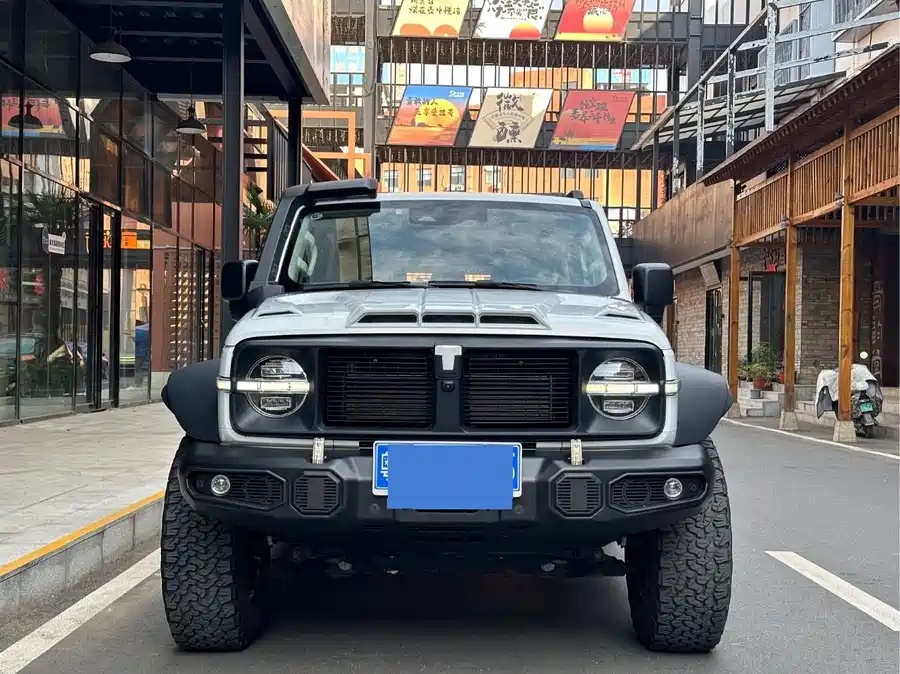
Assess a Tank 300 winch installation, wiring and recovery accessories before purchase. Separate documented equipment from an unsafe cosmetic upgrade.
Make an inventory of the installed package
Record the winch manufacturer, model, serial label, controller, isolator, mounting system and supplied accessories. Ask for purchase and installation records, intended vehicle compatibility and evidence of servicing. Identify whether the bumper and mounting structure were designed for that installation. The Tank 300 accessory and modification guide provides the wider configuration framework. A model badge or advertised pulling capacity alone does not verify the strength of the installed system. Missing labels, improvised brackets and undocumented changes deserve further assessment before the equipment receives any value in the offer.
Have the mounting and front-end condition inspected
A workshop should examine visible mounting hardware, supporting structure, corrosion, cracks, deformation and interference with cooling or sensors. Ask whether the vehicle has experienced heavy recovery loads or front impacts. Connect suspicious findings to the frame and underbody inspection. Do not assume a decorative loop or transport tie-down is an approved recovery point. The specialist must identify the intended use and limitations of each attachment. A visually straight bumper can conceal stressed mountings behind it, so any access limitation should remain explicit in the report.
Trace the electrical installation
Inspect cable routing, insulation, terminal condition, protection against abrasion and the isolation arrangement against the equipment instructions. Keep cables away from moving and hot components and ask a qualified installer to assess anything improvised. Check whether accessory loads have caused starting or charging complaints through the 12V and accessory-load guide. A short unloaded motor demonstration does not establish that the power supply is suitable under working load. Do not bridge terminals or improvise a control bypass during an inspection. Unknown wiring should be made safe by a professional before use.
Assess the line and controls without casual load testing
Have the line, hook, fairlead, drum and control system examined for wear, damage, corrosion or incompatible replacements. The appropriate inspection differs between wire rope and synthetic line. Ask for the maker instructions and replacement criteria rather than inventing a remaining-life percentage. A competent specialist can define a safe functional assessment. Keep people clear and never turn a seller demonstration into an improvised vehicle recovery. If the history is unknown, replacement of consumable recovery items may be more sensible than trying to establish their strength from appearance alone.
Confirm what can legally and practically stay on the car
Check destination requirements for protruding accessories, lighting, front protection, registration and road use with a suitable local adviser. Record the effect on actual vehicle dimensions, axle loading and cooling airflow. If removal is needed for export or compliance, price restoration of the original bumper, wiring and sensor setup. Loose recovery equipment may have separate carrier rules, so obtain written loading instructions. The winch should not be assumed acceptable merely because the vehicle can be driven out of the seller yard or because another buyer imported a similar-looking setup.
Set a condition-based value and handover record
Compare the installed system with the cost of a known, professionally fitted alternative at the destination. Deduct missing controls, worn line, corrective wiring and inspection costs rather than crediting the original retail receipt. List every included accessory in the sales record and photograph it before loading. If the buyer does not need a winch, removal and restoration may be the better outcome. Approval should mean the installation has a documented assessment and clear limitations; it should never imply that a sales inspection qualifies an inexperienced owner to perform vehicle recovery.
Evidence to collect
- Identified winch, mounting system and controls
- Specialist mounting and structure assessment
- Documented wiring and isolation inspection
- Line condition and maker instructions
- Destination legality and delivered accessory list
Primary references
Specifications and equipment can vary by market, model year, trim, VIN and production batch. Verify the exact vehicle and current destination rules before purchase.
GWM Australia Tank 300 brochure: market reference; verify the candidate separately ↗Frequently asked questions
Does an unloaded winch demonstration prove full capacity?
No. It shows only limited operation. The installation and equipment need an appropriate specialist assessment.
Can transport tie-down points be used for recovery?
Do not assume that. Use only points approved for the intended operation and follow vehicle and recovery-equipment instructions with trained assistance.