
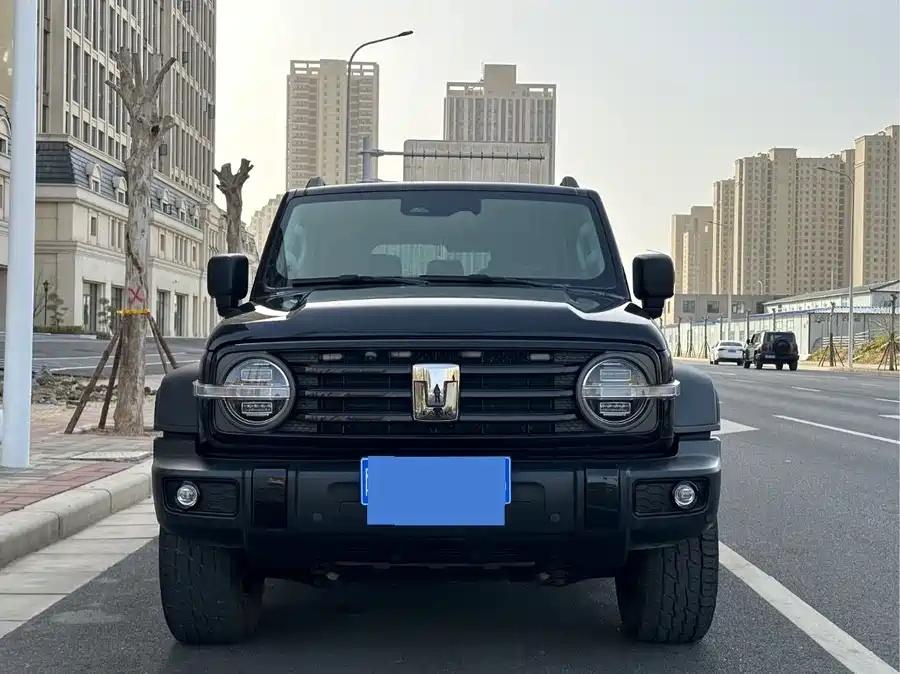
Inspect a used Tank 300 frame, body mounts, protection, suspension and recovery hardware for impact, repair, corrosion and hard-use evidence.
Confirm the frame and body relationship
Photograph both frame rails from front to rear, including stamped identity areas, crossmembers, body mounts and the points where suspension and recovery hardware attach. Compare left and right profiles for buckling, ripples, fresh welds, displaced brackets, uneven gaps or a body that no longer sits squarely on its mounts. Surface scratches and localised guard damage can be consistent with use; heat marks, distorted holes, cracked coating around a mount or an unexplained new section require specialist measurement. Paint depth on the outer body cannot rule out chassis work. Ask the inspector to state which areas were obstructed by protection plates, mud or accessories rather than describing an incomplete view as clear.
Read the underbody as a sequence of events
Map every impact mark instead of counting scratches. A long shallow scrape on a replaceable guard has a different consequence from a concentrated strike at a crossmember, fuel or battery protection, exhaust, transfer case, axle housing or suspension pickup. Check that guards are present, correctly fastened and not pressing against pipes, wiring or housings. Look for fluid residue after cleaning and after the road test. Fresh black coating, new bolts, missing clips or sealant that differs side to side should lead to a documented explanation. The related Tank 300 off-road capability guide helps distinguish fitted hardware from the condition of the candidate.
Check steering, suspension, wheels and recovery loads
Measure ride height on level ground and record spring, damper, arm, bushing, wheel and tyre identifiers. Uneven tyre wear, a crooked steering wheel, repeated balance weights, damaged rims or a vehicle that pulls under braking can indicate alignment, bearing or structural issues. Inspect tow and recovery points for elongation, cracking and unapproved welding. A winch or heavy bumper adds permanent load and can alter front-axle margin even when the installation looks tidy. Road-test at low and moderate speed, listen through turns and braking, and require alignment or geometry evidence when physical clues disagree with the seller's explanation.
Investigate water, corrosion and previous repair
Water exposure is judged through several clues: silt in protected cavities, tide lines behind trim, corrosion in low connectors, contaminated lubricants, damp insulation and recurring electrical faults. Saltwater or chemical exposure has a different risk from a brief freshwater crossing. Inspect drain points, seams, frame openings, fasteners, brake pipes and wiring clips under strong light. If a repair is declared, obtain before-and-after records, measurements, invoices and the identity of the repairer. If the repair cannot be characterised, price uncertainty should not be converted into a confident cosmetic allowance; escalate to structural review or reject the vehicle.
Evidence to collect
- Full frame-rail image set
- Body mounts and crossmembers
- Guard and housing impacts
- Suspension and alignment clues
- Recovery-point condition
- Water, corrosion and repair evidence
Apply the guide to a real candidate
Request an inspection map
Give the inspector a simple vehicle outline and require each impact, leak, repair clue and obstructed area to be marked by location. Link the mark to original-resolution photographs and, where necessary, a measurement. This prevents a large media folder from becoming unauditable and makes a second reviewer able to distinguish one damaged area photographed repeatedly from several separate issues.
Set stop conditions before inspection
Define which findings require specialist measurement or rejection: distorted frame rails, cracked mounts, unsafe recovery-point repair, water contamination or unexplained identity work are examples. Normal guard marks can remain commercial issues. A pre-agreed threshold stops the buyer from lowering standards after time and money have been invested in one attractive candidate.
Final approval control
Final approval should identify every structural or underbody exception by location and consequence. Record whether it is cosmetic, serviceable protection damage, a repair requirement, an unresolved structural question or a rejection item. Attach measurements and original images, not only a compressed messaging-app summary. If the buyer accepts a repair, specify the method, responsible workshop and post-repair validation. The vehicle should not move to the port while a frame, mount, recovery-point or water-exposure question remains described only as “probably fine.”
Primary references
Specifications and equipment can vary by market, model year, trim, VIN and production batch. Verify the exact vehicle and current destination rules before purchase.
Official GWM Tank 300 brochure ↗Frequently asked questions
Are scraped skid plates a reason to reject a Tank 300?
Not alone. Location, depth, deformation, leaks and the condition of adjacent mounts determine the significance.
Can fresh underbody coating be accepted?
It can be legitimate protection, but its date, preparation and the surfaces beneath it should be documented before approval.
Does a straight road test prove the frame is sound?
No. Alignment behaviour is useful evidence, but inspection and measurement are still required where structural clues exist.