
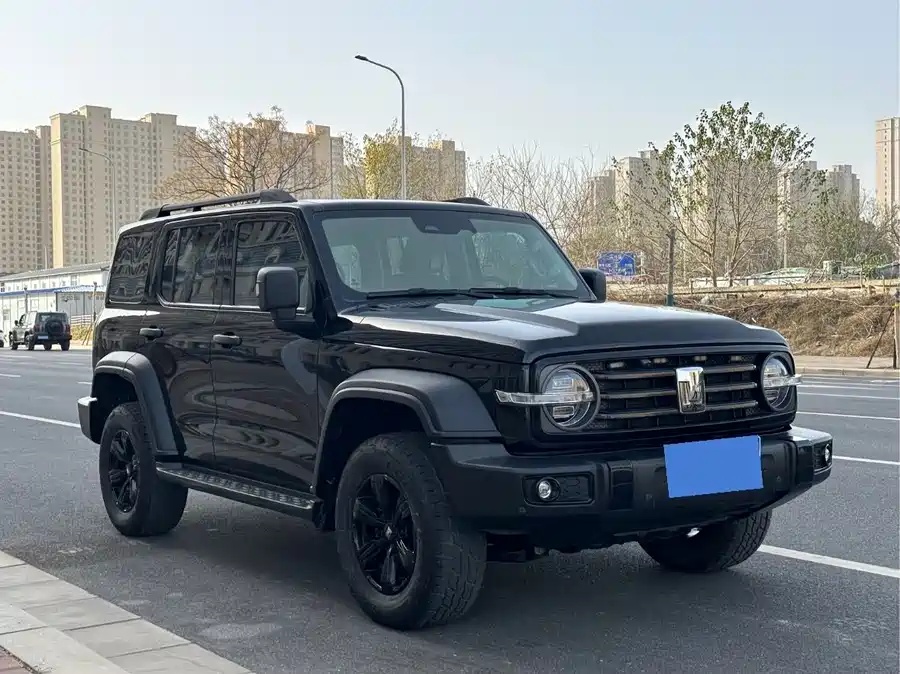
Compare Tank 300 and three- or five-door Jimny offers through passenger space, terrain needs, daily access, loading and destination support.
Identify the body and market configuration
Suzuki publishes separate three-door and five-door product information. Confirm which is offered, its production record, original market and approved seating. Keep that distinction visible throughout the quotation and inspection process. On the Tank side, use the version identification guide rather than assuming all 300-labelled cars share one body or powertrain. A comparison made with a five-door Jimny cannot be reused unchanged for a three-door candidate. Do not assume a steering conversion or seat addition is acceptable merely because another market sells a different configuration. Registration eligibility remains a destination-specific check before the buying decision.
Test occupants before judging exterior size
Set the front seats for the actual driver and passenger, then assess rear access and occupied-seat comfort. Use real child seats where needed and check the candidate’s applicable installation instructions. The Tank child-seat and family-loading review supplies a repeatable brief, not Jimny installation approval. Consider whether rear occupants will travel for short errands or long days. A compact vehicle can be enough for a small crew, but squeezing the required family into it is not an economy. Conversely, purchasing a larger cabin for mostly single-occupant travel should be justified through an actual task rather than appearance.
Compare luggage and approved loaded mass separately
Trial the bags and equipment required when the necessary seats remain available. Record rear access, storage compromises and any roof or hitch solution being proposed. Cargo space and carrying permission are different questions. Use the payload and roof-load process for the Tank, then obtain the Jimny’s own applicable limits. Do not compensate for inadequate internal luggage space with an unverified roof-load assumption. Accessories consume mass before passengers and travel supplies are counted. If a touring configuration is central to the purchase, obtain an appropriate loaded assessment rather than evaluating only empty demonstration vehicles.
Define the terrain without declaring a badge winner
List the actual tracks, road approach, surfaces and recovery support. Suzuki’s official information identifies its own chassis and low-range arrangement; that does not prove any used candidate’s condition or suitability for every trail. The Tank off-road assessment likewise requires installed hardware and qualified checks. Vehicle dimensions may affect access, while condition, tyres, load and driver competence also matter. Do not use dramatic water or trail videos as permission to repeat those actions. A buyer seeking occasional rough-road access may value daily usability more than a feature that only matters on a particular technical obstacle.
Include the normal road journey in the trial
Assess permitted urban and motorway use with the intended driver and representative passengers. Observe noise, vibration, comfort, visibility and luggage movement, and document route conditions. The Tank motorway trial shows how to keep impressions comparable. Do not infer the outcome from engine size or exterior dimensions alone. A car suited to a narrow access track may still fail the buyer’s ordinary long-road requirement, while a larger car can be awkward at the garage. The purchase should account for the complete journey from home to destination rather than valuing only the most exciting section.
Compare available support and preparation-adjusted cost
Obtain separate inspection reports and receiving-workshop answers for the exact variants. Confirm parts supply, service information and any region-specific electronics or warranty limits. Normalise the vehicle and export budget and add known work before comparing prices. A locally familiar Jimny may have a support advantage, but that must be established for the candidate rather than assumed for every import. A Tank may offer equipment that solves the buyer’s brief, but optional features should not hide preparation exposure. Test plausible ownership and exit outcomes without treating a popular badge as a guaranteed resale value.
Select the smallest package that fully solves the brief
Prefer the candidate that meets passenger, luggage, access, terrain and ownership-support requirements without relying on unverified modifications. If one essential task fails, describe that failure clearly instead of averaging it away against attractive features. A two-person daily and trail brief can lead to a different answer from a family touring brief. Keep the approved configuration and inspection findings beside the VIN, and reassess any substitution. This comparison does not assign a universal reliability, fuel-consumption or off-road ranking; it provides a disciplined way to choose between the actual offers available.
Evidence to collect
- Three-door or five-door Jimny identified
- Actual passenger and child-seat trial
- Luggage fit distinct from load approval
- Daily route and intended terrain tested
- Independent support and preparation quotations
Primary references
Suzuki’s separate body-range pages provide product context. Seating, load approval, steering and equipment must be confirmed for the candidate’s own market and production.
Suzuki: three-door Jimny range ↗Suzuki: five-door Jimny range ↗Frequently asked questions
Should a five-door Jimny comparison be reused for a three-door car?
No. Access, passenger use and luggage arrangements must be evaluated for the offered body configuration.
Does a compact footprint automatically make the Jimny a better buy?
No. It can help access, but the complete passenger, load, road and service brief still needs to be met.