
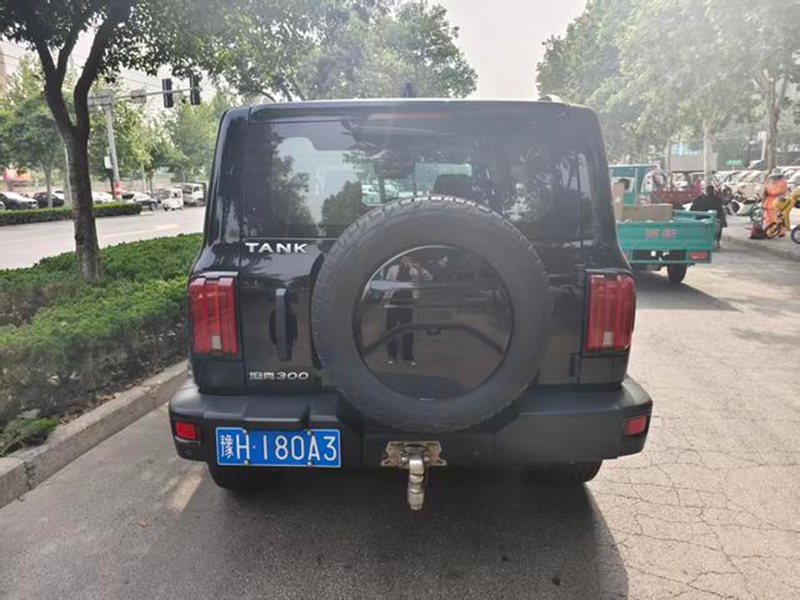
Inspect Tank 300 rear-door hinges, seals and spare-wheel mounting. Test luggage access and parking clearance with the delivered wheel and accessories.
Identify the spare and everything mounted around it
Record wheel and tyre size, pressure, condition and mounting hardware. Compare the spare with the road wheels, especially if larger tyres have been fitted. Note covers, ladders, storage brackets, auxiliary lighting or other added weight. Ask whether any original mounting parts were removed. Use the Tank 300 modification guide to keep the delivered configuration clear. A spare that cannot perform its intended function is not made useful by matching the appearance of the other wheels; confirm compatibility and any restrictions using the exact vehicle guidance.
Check hinges, latch and body alignment
Open and close the door normally while the vehicle is parked safely on level ground. Observe gaps, latch engagement, hinge movement, contact marks and abnormal effort. Do not use the door as a support or force it beyond its intended travel. Inspect visible mounting areas for cracks, distortion, corrosion and evidence of previous adjustment. If a heavier spare or carrier was installed, ask who confirmed suitability. A door that needs lifting to close should not be dismissed as normal weight; it needs diagnosis of hinges, mountings, latch position and possible body damage.
Inspect sealing and rear-cabin evidence
Look for dust tracks, water staining, damaged seals and wear around the luggage opening. Examine the accessible floor well and trim with permission. A dusty vehicle used on unsealed roads may reveal sealing weaknesses that a clean showroom car hides. Ask about rear-impact repairs and replacement glass. If damage extends beyond a door adjustment, connect it to the accident and restraint inspection. A fresh seal may stop a symptom while alignment remains wrong, so any repair should be followed by a suitable closure and sealing assessment.
Try the buyer luggage and parking arrangement
Measure the space needed to open the door enough for normal loading. Consider a wall behind the vehicle, a narrow parking bay, a trailer connection and the direction passengers approach. Trial the largest regular item instead of relying only on cargo litres. The Tank 300 family and boot-space guide covers the wider seating decision. Added storage drawers may improve organisation but raise the load floor or obstruct access to equipment. Confirm that the buyer can reach essential items without unloading the entire vehicle or standing in a hazardous traffic position.
Assess spare-wheel service and replacement practicality
Ask a workshop to check wheel fasteners, mounting condition and the supplied tools against the correct instructions. Verify that the buyer can arrange safe roadside assistance; do not assume a large spare can be handled easily by every owner. Inspect the jack and equipment inventory, but do not conduct a casual lifting demonstration on unsuitable ground. Confirm local tyre availability and whether the spare has aged unused. A worn or incompatible road set may require a complete tyre plan rather than simply replacing the spare to make the handover photographs look complete.
Include corrections in the purchase decision
Price hinge or latch diagnosis, seal work, compatible spare equipment and removal of unsuitable accessories separately. Compare a standard rear-door setup with a modified one according to the buyer’s actual use. Require all accepted hardware and the agreed spare to remain on the vehicle until loading. Photograph the rear door open and closed at handover, and ask the receiver to inspect it before signing off delivery. If access is awkward for daily use, no mechanical repair will change the parking geometry; choosing another configuration may be more sensible than accepting a persistent inconvenience.
Evidence to collect
- Spare compatibility and accessory mass inventory
- Hinge, latch and mounting condition
- Dust and water sealing evidence
- Real parking and luggage clearance trial
- Tools, tyre replacement and assistance plan
Primary references
Specifications and equipment can vary by market, model year, trim, VIN and production batch. Verify the exact vehicle and current destination rules before purchase.
GWM Australia Tank 300 brochure: market reference; verify the candidate separately ↗Frequently asked questions
Is a rear door that needs lifting normal with a large spare?
Do not accept that explanation without inspection. Added weight may expose hinge, mounting or alignment problems.
Does an unused spare need checking?
Yes. Age, pressure, condition, size and compatibility matter even when tread wear is low.