
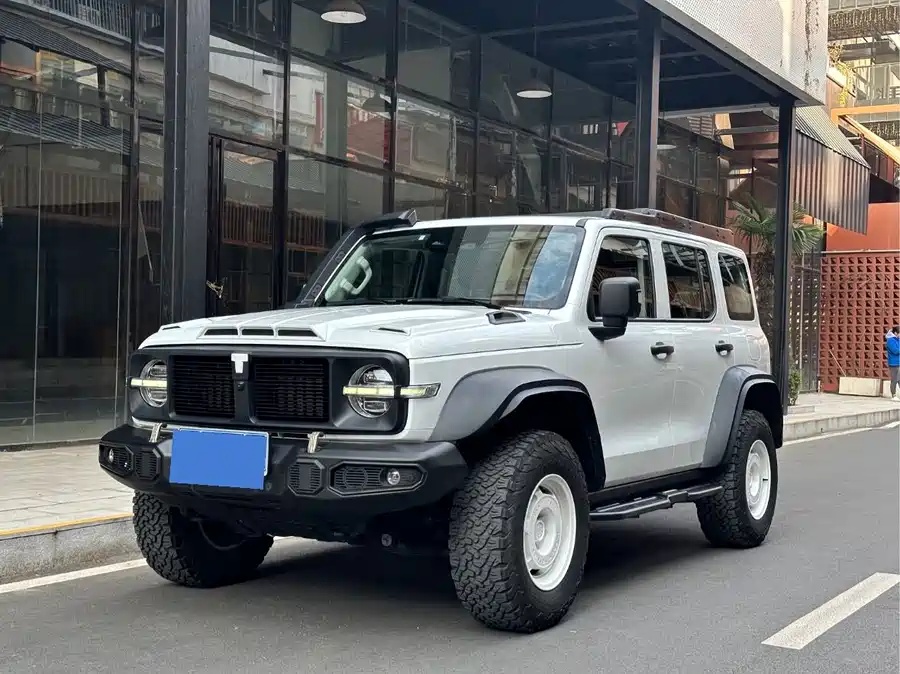
Inspect a lifted Tank 300 for geometry, steering behaviour, tyre clearance and installation evidence before valuing an aftermarket suspension kit.
Identify exactly what has changed
Request kit invoices, part numbers, installation date, intended load and any engineering or inspection records. Photograph springs, dampers, arms, mounting hardware, tyres and wheel offset markings where accessible. Distinguish a suspension lift from body spacers and a tyre-size increase; each changes different relationships. Compare the candidate with its original specification through the modification and accessory guide. A seller description such as two-inch lift is not a complete configuration record and does not establish compatibility, legal approval or the amount by which shipping height has increased.
Inspect installation before the road test
A competent workshop should check mounting integrity, fasteners, bushes, joints, brake hoses, sensor wiring and clearances through the relevant movement range. Look for contact marks, stretched lines, loose hardware and incorrectly seated components. Do not crawl under an unsupported vehicle or conduct improvised articulation tests. Document any damaged or removed protective parts. If components from different kits have been combined, ask who verified the resulting geometry and load suitability. Brand reputation cannot compensate for an incomplete installation, and a new-looking damper does not establish that the rest of the system is sound.
Read alignment results as evidence, not a sticker
Ask for before-and-after alignment measurements, the specification used and the vehicle load during the procedure. A report should identify the car and show the relevant angles rather than simply say passed. Examine tyre wear across each tread and ask whether new tyres were fitted just before sale. Fresh rubber can remove the strongest visible record of poor geometry. Persistent pull, an off-centre wheel or uneven return-to-centre needs diagnosis. The workshop should explain whether adjustment is available or whether a damaged, worn or incompatible component prevents a satisfactory result.
Drive on normal roads as well as rough surfaces
Use a safe route to assess straight tracking, moderate braking, lane changes, steering response and vibration at legal speeds. Record load, tyre pressures and surface conditions. A lifted car that feels acceptable at walking pace may wander or vibrate on the motorway. Do not provoke emergency manoeuvres to prove stability. Investigate vibration through the Tank 300 motorway test guide and separate tyre, wheel, shaft and mounting causes. The buyer should test the usage that matters most, not only the off-road setting where the modifications look impressive.
Check accessories, sensors and load interaction
Additional bumpers, a winch, roof equipment and rear storage change the mass carried by the suspension. Ask whether the chosen springs suit the delivered load rather than a previous camping setup. Check headlamp aim and any sensor calibration obligations after height or alignment work with qualified service information. Larger tyres can affect spare-wheel fitment, clearance and other vehicle functions, so examine the complete package. Confirm that the actual configuration can be accepted at the destination through the relevant local process; a roadworthy certificate from another jurisdiction is not universal approval.
Value the kit by its usable outcome
Compare the modified candidate with a standard car plus a properly specified local installation. Include corrective parts, alignment, calibration, tyre replacement and possible return to standard. Do not pay full retail accessory prices merely because the seller supplies old receipts. A sound system with relevant records may add value to the right buyer, while an undocumented mixture may create removal cost. Write the delivered configuration into the contract so desirable parts cannot be swapped before loading. Recheck ride height and visible hardware at handover against the accepted inspection photographs.
Evidence to collect
- Complete modification and load inventory
- Installation, hose and wiring clearance check
- VIN-linked alignment measurements
- Normal-road steering and braking assessment
- Destination acceptance and correction budget
Primary references
Specifications and equipment can vary by market, model year, trim, VIN and production batch. Verify the exact vehicle and current destination rules before purchase.
GWM Australia Tank 300 brochure: market reference; verify the candidate separately ↗Frequently asked questions
Does a recent alignment prove a lifted Tank 300 is correct?
No. Review the measurements, underlying component condition and road behaviour, and confirm the specification used is appropriate.
Should aftermarket accessories increase the purchase price?
Only when their condition, compatibility, installation and usefulness are established. Unwanted or unsupported equipment can reduce value.