
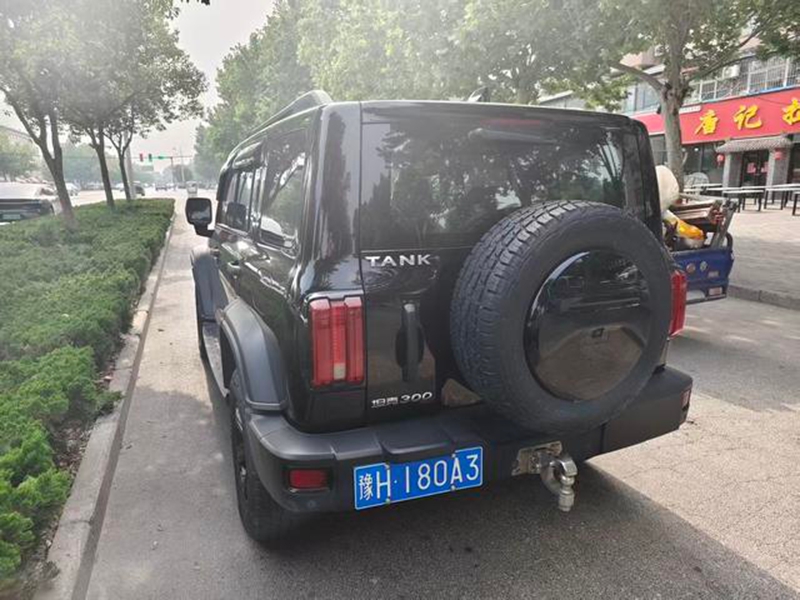
Evaluate a high-mileage Tank 300 by duty cycle, credible records, chassis and driveline findings, repair access and the actual price discount.
Verify the number before discussing a mileage discount
Reconcile dated services, inspection records and ownership information with the odometer. Look for inconsistent distances or gaps and ask the responsible parties to explain them. Wear observations support questions, not a definitive mileage reading. The history guide establishes the evidence chain. A low reading with unclear records is not automatically preferable to a high reading supported by coherent maintenance. Keep the candidate’s uncertainty visible instead of pricing it as a verified low-mileage car simply because the dashboard displays a smaller figure. Do not approve a substitution on mileage alone.
Identify how the distance was accumulated
Ask about long-road travel, towing, daily traffic, organised trails and commercial use. Record the answers as reported information and corroborate them where possible. Distance at steady road speed can represent a different duty from repeated low-speed terrain, extensive idling or recovery work. The post-trip service review helps assess hard-use maintenance. No single photograph proves abuse, and a clean cabin does not establish gentle use. The purpose is to tailor the inspection to the actual operating story rather than repeating a generic high-mileage warning for every used SUV.
Assess the chassis independently of the engine impression
Require accessible frame, mount, suspension, steering, wheel and brake findings. Guards and fresh coatings can obstruct evidence and should be recorded as limitations rather than guarantees of protection. The underbody sequence helps connect impact and repair observations. Have suspicious geometry or structural work professionally assessed before bargaining. Count age-related rubber, bearings and consumables where condition supports the need. A smoothly idling engine is not a whole-car approval, especially when a touring setup may have changed operating mass and axle distribution over years of use.
Give the actual drivetrain an appropriate assessment
Identify the engine, gearbox, transfer case and fitted differential equipment. Obtain suitable cold and warm tests, scan evidence and maintenance records. The 4WD function assessment should follow the installed system’s instructions. For an electrified version, add the relevant battery and energy-system scope rather than using a petrol-only conclusion. Investigate unexplained warnings, thermal complaints or engagement concerns. Do not translate a seller’s claim that these engines last forever into a usable remaining-life estimate. Current observations have limits and should not be presented as a guarantee of another particular distance.
Price defined work and preserve undefined exposure
Request complete estimates from a workshop that can support the exact variant. Separate due consumables, diagnosed faults, optional cosmetic improvements and matters still requiring investigation. Include parts transport or access constraints when they affect the real repair path. The inspection-led negotiation guide prevents a discount being based on an assumed cheap part before diagnosis. Do not add every imaginable failure as a certainty, but do not hide a major unresolved issue inside a token reserve either. The buyer should know which money is a committed cost and which is a buffer against uncertainty.
Compare another actual car over the intended ownership period
Obtain a lower-mileage or better-documented alternative using the same essential specification and delivery basis. Add preparation to both and use the same route, annual distance and destination costs. The three-year ownership worksheet includes exit scenarios without promising resale. An unusually cheap high-mileage candidate can still offer poor value if parts support is weak or near-term work consumes the saving. Conversely, paying substantially more for a lower reading may not help when its history or modifications create comparable uncertainty. Compare evidence and complete exposure, not two odometer numbers in isolation.
Make the accept or reject boundary explicit
Proceed when the history is credible, important systems are assessed, known preparation is affordable and the remaining risk fits the intended use. Investigate further when a specific unanswered question can reasonably be resolved. Reject when serious structural or drivetrain uncertainty remains unacceptable, even if the seller discounts heavily. Write those reasons beside the VIN and preserve the underlying reports. A high-mileage purchase can be defensible, but only as a particular transaction with a defined support and preparation plan. This assessment does not provide a universal maximum mileage or a manufacturer reliability guarantee.
Evidence to collect
- Corroborated mileage chronology
- Reported duty with supporting evidence
- Frame and consumable findings
- Variant-specific driveline assessment
- Preparation reserve and comparable alternative
Frequently asked questions
Should every Tank 300 above 100,000 kilometres be rejected?
No universal threshold applies. Condition, duty, history, support and price must be assessed together.
Can low mileage outweigh an unclear off-road history?
Not automatically. A smaller reading does not resolve structural, repair or maintenance uncertainty.