
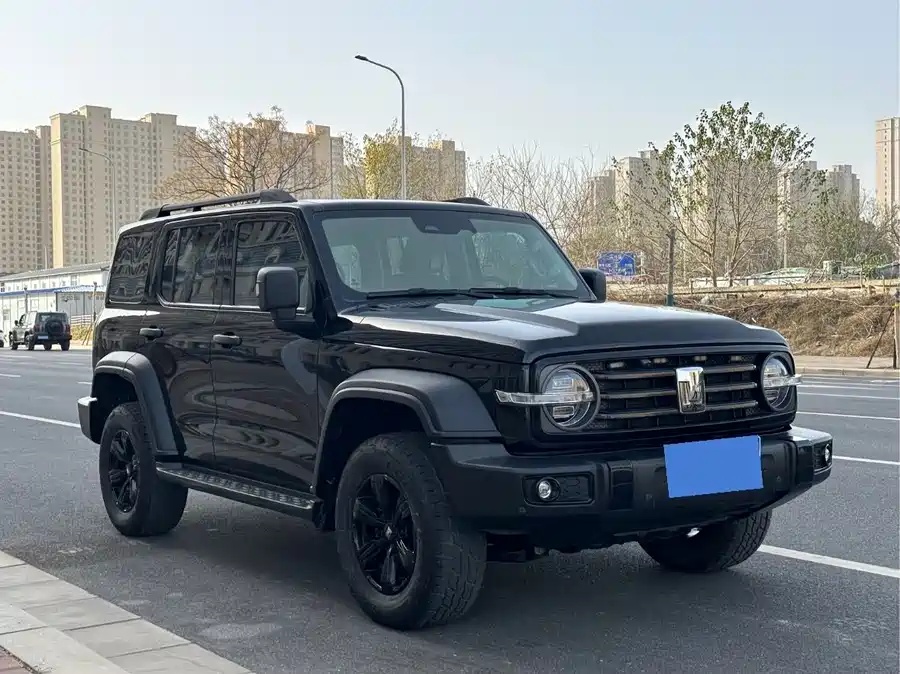
Assess a Tank 300 locker-equipped trim premium through genuine fitment, intended terrain, functional evidence, support and complete value.
Establish the actual factory configuration
Request build or original-market equipment evidence and reconcile it with the vehicle. Identify front, rear and transfer-case arrangements accurately; do not treat every drive-mode label or differential description as equivalent hardware. The version guide separates trim claims from demonstrated fitment. If considering Challenger and Conqueror offers, retain their production and market context rather than borrowing a later model’s equipment. A dashboard control or seller statement is useful evidence to investigate, not a complete proof of factory installation or current function. Record aftermarket work separately so the premium is not based on a false factory claim.
Decide which terrain makes the equipment useful
Describe the actual route, surfaces, load and support arrangements. Identify the circumstances where the buyer expects traction equipment to matter, and distinguish them from ordinary paved travel. The off-road use assessment keeps this within the whole vehicle brief. Do not claim that differential locks guarantee passage, eliminate recovery risk or compensate for unsuitable tyres, load or driver training. If the buyer has no relevant task, the feature may remain optional even when desirable to another owner. A specialised requirement can justify searching for a verified configuration instead of attempting an unsupported retrofit after purchase.
Require an appropriate functional assessment
Have a qualified assessor test the identified system under suitable conditions and the applicable operating instructions. The 4WD and differential-lock function guide describes the separate inspection brief. Avoid inappropriate testing on surfaces where the manufacturer’s instructions prohibit engagement. Record what was tested, what was not and any warnings or diagnostic findings. A seller’s video of a lamp illuminating does not necessarily establish successful mechanical engagement. If a symptom appears, obtain diagnosis before treating the car as a healthy locker-equipped example. An unresolved fault should not be hidden behind an attractive specification or a small repair allowance.
Inspect the duty and modifications around the system
Review underbody impacts, axle-related findings, wheels, suspension changes and recovery history where evidence is available. Use the frame and underbody review to connect observations rather than assume that every equipped vehicle has been abused. Locker fitment can be attractive to terrain users, but the feature itself does not prove a particular history. Conversely, a clean exterior does not establish gentle duty. An accessory package may complicate the assessment through altered geometry, wiring or concealed areas. Keep the current condition and inspection limitations separate from the desirability of the factory equipment.
Confirm parts and competent service support
Ask the receiving workshop about the exact installed system, diagnostic access and component supply. The maintenance and parts record should identify the configuration rather than list generic brand support. Clarify the repair path if a function later fails, including any market-specific electronic or mechanical requirements. Do not assume components from another trim or model are interchangeable. A feature that solves a terrain requirement can still create an ownership difficulty if it cannot be assessed or serviced locally. Treat warranty as a separate provider-and-destination question, not as a substitute for an accessible paid repair route.
Compare the premium on an equivalent basis
Select two real candidates with otherwise comparable condition, production, delivery terms and preparation. Separate the locker package from other trim differences so the premium is not attributed to one feature that actually accompanies several changes. Use the price comparison guide and include diagnosed work or missing evidence. Consider tyres and other essential equipment without assuming locks replace those needs. If the lower-priced car needs an unsupported retrofit to satisfy the brief, it may not be a genuine alternative. If both vehicles meet ordinary daily-use requirements, paying more should be an informed preference rather than a claimed necessity.
Record the accepted equipment and decision
Choose the verified configuration when the task, condition, function and support justify its complete premium. Prefer another candidate when the equipment is irrelevant to the brief or its important uncertainties cannot be resolved. Put the accepted hardware and inspection scope into the purchase file and accessory schedule so a substitute VIN cannot quietly change the agreement. A higher trim badge does not override a failed technical check. This guide values a feature in a specific purchase; it does not provide operating instructions or recommend that an untrained buyer engage locking equipment in unsafe or prohibited conditions.
Evidence to collect
- Factory versus aftermarket identity established
- Terrain task that justifies the feature
- Qualified function and diagnostic record
- Chassis condition and installation context
- Supported premium versus a comparable candidate
Frequently asked questions
Does a trim badge prove both axle lockers are fitted?
No. Verify original-market equipment and the actual hardware for the candidate rather than inferring it from a badge.
Can a locker warning be handled with a small assumed discount?
Not responsibly. Diagnose the issue and obtain a supported repair path before pricing the vehicle as an acceptable purchase.