
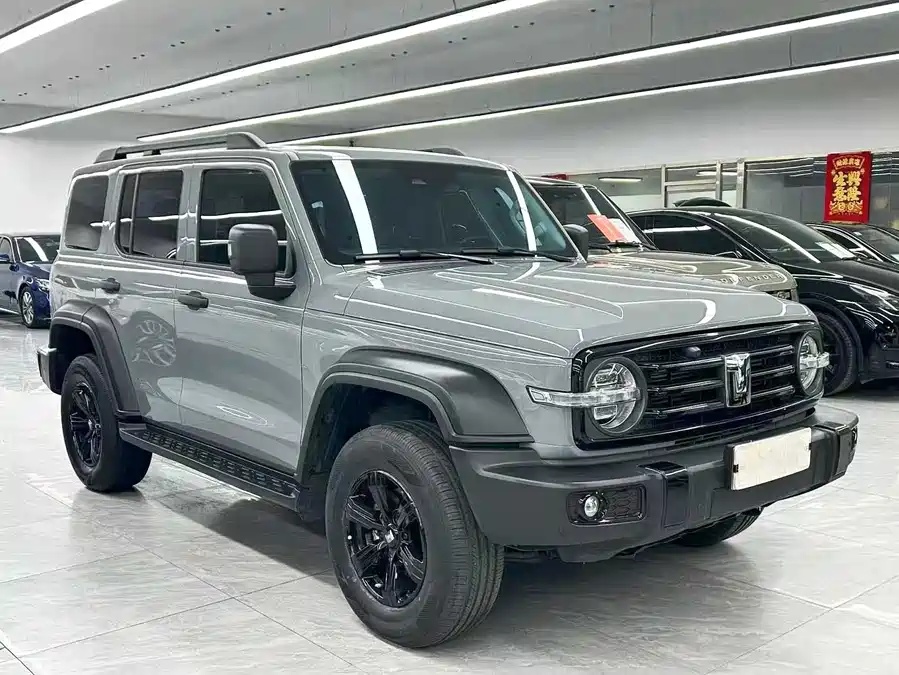
Compare actual Tank 300 and Ford Everest offers for seating, loaded touring, towing approval, diesel or hybrid support and complete cost.
Confirm the seats that the actual vehicle provides
Ford’s Australian range distinguishes configurations, so verify the offered car’s seats, trim and original market instead of assigning one arrangement to the whole model. Test access and occupied-seat luggage with the people who will travel. The Tank family-space review establishes the baseline. If the task needs additional seats, a five-seat candidate cannot be made equivalent by quoting a different trim’s brochure. If five seats are enough, compare comfort and load use rather than treating an unused third row as a necessary upgrade. Keep approved passenger capacity distinct from how many people can physically squeeze into the cabin.
Identify the powertrain and emissions-support requirements
Record the engine, transmission and energy-system identity in each offer. An Everest diesel comparison needs its own maintenance and emissions-system assessment; a Tank plug-in comparison needs an additional energy and charging scope. Use the Tank powertrain-choice guide to describe the route before selecting the system. Do not transfer Australian engine availability to an imported Everest from another market. Ask receiving workshops about the exact diesel hardware and any applicable fluids or regeneration support. Familiarity with a model name is insufficient if the offered system differs from the locally serviced range.
Use the actual towing and loading documents
Request the relevant vehicle, trailer, axle and combination limits for each candidate and destination. Ford’s published towing material is configuration- and period-specific; it is not a universal entitlement for every Everest. The Tank towing and payload guide also requires the actual approval record. Include occupants, cargo, accessories and any coupling load in an appropriate calculation. A high advertised trailer figure does not answer the remaining payload or axle balance. If towing is essential, stop the comparison until the required legal and physical limits are documented rather than buying on an attractive headline.
Inspect the used touring history
Ask about caravan duty, commercial travel, terrain use and accessory changes, then require evidence appropriate to the reported history. Inspect frame and body relationships, suspension, steering, brakes, wheels and installed hitch equipment. The Tank underbody review is a process reference, not an Everest report. Check both candidates independently and preserve limitations. A towbar is neither proof of abuse nor proof of correct installation. Strong engine performance during a short trial does not rule out underbody damage, deferred maintenance or an unsupported accessory package. Price findings only after the relevant technical assessment.
Try the everyday access and complete journey
Measure parking, garage entry and rear loading access, and assess passenger entry beside adjacent vehicles. The Tank rear-door clearance guide shows why a vehicle that fits a bay may still lack usable loading space. Trial the normal road journey where permitted, including the intended passengers and a representative loading arrangement. Evaluate visibility, ride and cabin use without assuming that one body style wins every task. The larger vehicle’s advantages should solve something important, while the smaller vehicle’s access benefits should not conceal a passenger or luggage requirement it cannot meet.
Compare destination support and complete exposure
Obtain variant-specific servicing, parts and diagnostic answers, including any warranty that genuinely applies after import. Calculate purchase, inspection, preparation and delivery on the same basis using the landed-cost worksheet. Then compare route-based running costs and conservative exit outcomes in the three-year ownership guide. Local dealer presence may matter, but confirm whether it covers this imported specification. Do not assume an overseas warranty is transferable. A cheaper vehicle can lose its advantage through unsupported components or extensive preparation, while a higher purchase price can be justified by demonstrably better fit and support.
Choose against non-negotiable requirements
Define which seating, loading, towing and service conditions must be met and which equipment is optional. Use demonstrated evidence to accept or reject each offer before negotiating cosmetic or convenience premiums. If either car depends on a hoped-for registration approval or undocumented towing limit, that is an unresolved buying condition. Retain the comparison beside the candidate records and repeat it for a substitute VIN. The result can legitimately differ between a five-seat commuter, a family requiring extra seats and a towing buyer; there is no universal winner based on badge or brochure size alone.
Evidence to collect
- Market-specific seats and actual family fit
- Exact engine and emissions support
- Candidate-specific towing and axle records
- Independent used touring inspection
- Like-for-like delivery and ownership totals
Primary references
Ford references describe their stated market and period. Confirm the actual candidate’s seats, drivetrain, legal ratings and local support separately; older towing information is not a current universal rating.
Ford Australia: current Everest range context ↗Ford: configuration-specific 2023 towing guide ↗Frequently asked questions
Can one Everest towing headline be used for every used car?
No. Verify the exact variant, production period, destination approval and combination limits before using a rating.
Does local Ford presence guarantee support for an imported Everest?
No. Confirm service, parts, diagnostic access and any warranty for the actual original-market configuration.