
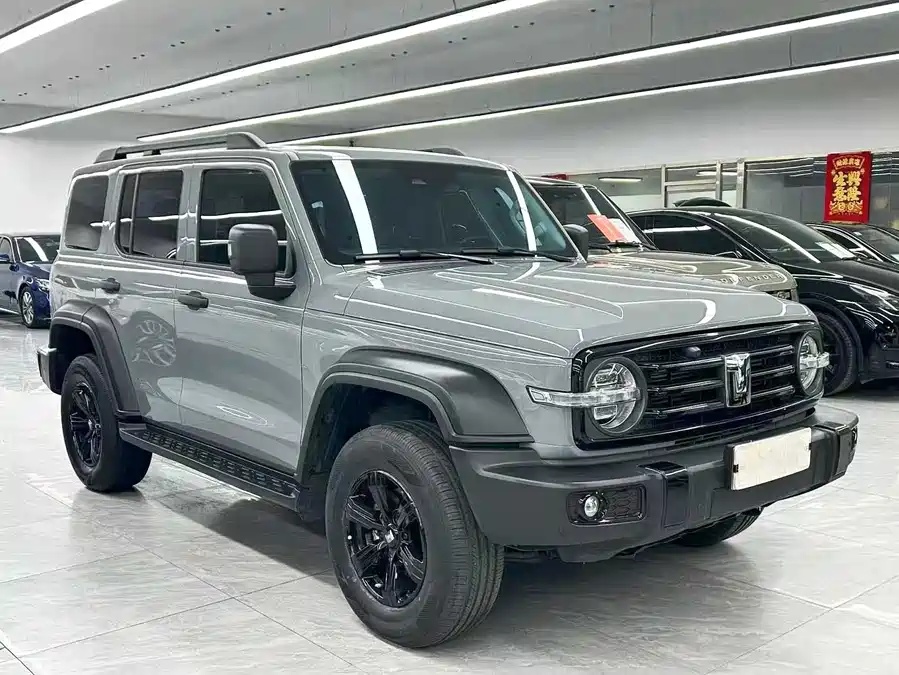
Compare Tank 300 and Haval H9 candidates by generation, passenger layout, real condition, terrain duty, local support and delivered cost.
Separate H9 generations before comparing equipment
Request production records and original-market documentation. GWM’s announcement of the newer H9 in Saudi Arabia establishes that market’s launch context; it does not identify an earlier Chinese or export used vehicle. Keep generation and registration year separate for both cars. The Tank version record helps prevent a similar mistake on the 300 side. If the seller uses a new-model brochure alongside older photographs, reconcile the inconsistency before valuing the specification. An exact generation is necessary for meaningful parts, feature and condition comparisons, especially where an advertisement uses only H9 or Tank 300 as its description.
Confirm whether extra passenger capacity is actually useful
Check the installed, approved seat arrangement and test it with the people who will travel. Do not infer usable additional seats from exterior size or a model-wide claim. Assess access, child-seat fit and the luggage remaining when required seats are occupied. The family loading review provides the Tank baseline. An occasional extra passenger need may still justify a larger configuration, but only if it is legal and practical. If every journey uses five seats, consider whether the alternative’s cabin layout, luggage access and daily footprint offer a real advantage rather than paying for an assumed capacity.
Match the actual powertrain to the route
Identify the engine, transmission, energy system and drive hardware in both candidates. Do not assign a newer diesel or petrol package to an earlier H9 or equate every Tank 300 with conventional petrol. The petrol, hybrid and diesel decision guide helps frame the duty-cycle questions without establishing another model’s fitment. Review short-trip frequency, long-distance travel, available fuel and workshop access. Emissions-system support matters where a diesel is involved; charging access matters where a plug-in Tank is involved. Compare the real route with the actual system rather than using one fuel-type slogan for all buyers.
Ask for equivalent terrain and underbody evidence
Specify body and frame condition, suspension, wheels, protection, prior recovery work and fitted traction hardware. A claimed low-range system or locking differential needs physical identification and appropriate functional assessment. The Tank off-road hardware review sets the questions to ask, not an automatic performance ranking. Require equivalent evidence for the H9. Factory capability cannot erase damaged mounting points, unsupported lifts or uncertain repairs. Record limitations when guards or coatings conceal the relevant area. If terrain is modest, an expensive equipment advantage may not matter; if the duty is demanding, an unresolved structural concern should dominate the decision.
Compare support for these configurations, not just the parent group
Ask receiving workshops about both exact vehicles, including diagnostic access, parts identification and expected supply routes. Shared manufacturer ownership does not prove that components, software or service schedules are interchangeable. The parts preparation guide explains the required Tank record. Obtain a separate answer for the H9 and keep unconfirmed support visible. Local familiarity with one generation may not extend to a newer system or another market’s equipment. Confirm the warranty provider and destination coverage independently instead of assuming a brand relationship transfers an overseas warranty to the imported candidate.
Normalise the used-car price and near-term work
Put both quotations on the same inspection, delivery and payment basis. Add diagnosed preparation, due consumables and any required changes supported by written estimates. Use the landed-cost guide so a low vehicle price is not compared with a delivered, prepared alternative. Keep optional accessories outside essential costs. Consider the three-year ownership comparison if running costs or resale exposure could reverse the initial saving. Do not value an uncertain repair as a known cheap fix. A better-documented older car may represent stronger value than a newer advertised generation with unresolved identity or condition questions.
Choose from a written requirements comparison
List the must-have seats, usable load, route, equipment and support conditions. Mark each candidate as demonstrated, pending or unsuitable against them. Proceed only when the important pending checks are resolved and the complete price remains acceptable. A car that fails an essential passenger or service requirement is not made suitable by a larger discount. Retain both configuration and inspection files because a new VIN needs a new comparison. This approach supports a particular buyer’s decision without claiming a universal reliability winner between the Tank 300 and Haval H9.
Evidence to collect
- H9 generation and Tank version verified
- Actual seats and occupied-seat luggage fit
- Powertrain suitable for the route
- Equivalent chassis and traction evidence
- Variant-specific support and cost comparison
Primary references
The cited announcement concerns its stated launch market and generation. It is not a specification, seat approval or inspection record for an arbitrary used H9.
GWM: new Haval H9 Saudi launch context ↗Frequently asked questions
Does a newer H9 brochure describe every used H9?
No. Production, generation and original market must match the candidate before brochure claims enter the comparison.
Are H9 and Tank 300 parts automatically interchangeable?
No. Shared manufacturer ownership is not a parts or software compatibility record; confirm components by the identified vehicle.